No posts yet. Check back soon!
%22/%3E%0A%20%20%3Ctext%20x=%2250%22%20y=%2250%22%20text-anchor=%22middle%22%20dy=%22.35em%22%0A%20%20%20%20font-family=%22system-ui,%20sans-serif%22%20font-weight=%22700%22%0A%20%20%20%20font-size=%2238%22%20fill=%22white%22%3ELC%3C/text%3E%0A%3C/svg%3E)
Haunted by the ghosts of materialism
05:27 AM · Oct 03, 2026
I like philosophy. Not all of it is profound — there are two dozen treatises on the ontology of holes — but the field is accessible and can be eye-opening.
Alas, the only flavor of philosophy that’s popular with techies is what I’d call edgelord utilitarianism — a collection of materialist, pseudo-mathematical beliefs favored by the SF Bay Area rationalist community. The system is a dependable source of unconscionable ethical stances, middling essays about AI, and little else.
To me, philosophy is more interesting when it exposes the limits of understanding. In some of the earlier articles, I touched on the bounds of mathematical knowledge, the taxonomy of paradoxes, and the meaning of consciousness. Today, let’s tackle two other lighthearted questions: does anything matter and does anything exist?
The universe is your stage
The experience of free will is not up to serious debate. The idea can be rejected only speciously: argue what you like, but every waking hour, you seem to be in the driver seat. Not every choice is always available to you, but act with the conviction of a free agent: you make the call what to have for breakfast or when to put down the phone.
At the same time, free will clashes with scientific materialism — that is, the belief that there’s nothing beyond the physical realm, and that this realm is governed by unchanging laws. In classical physics, the universe is deterministic: every action is a necessary consequence of what happened before. In this view, everything you do is predetermined and flows from a rigid causal chain going back to the beginning of time.
But if we have no agency, then in a sense, nothing matters. The world is on autopilot: our thoughts are scripted, our actions inevitable. You had to read this article; a criminal had to commit a crime. It’d be odd to punish them, but that’s fine: we can’t help it, so we shoulder no blame. In a deterministic universe, we’re just front-row spectators of a stage play set in motion eons ago.
Of course, this is at odds with how we, in the most basic sense, perceive ourselves. The instinctive sensation of choosing aside, we also have no trouble imagining coherent, physically-compatible realities in which some events have unfolded in a different way. For example, we can reason about what could have happened if we picked another major or ordered a burger instead of a salad; in these thought experiments, the laws of physics don’t need to change.
One could dismiss free will as a useful illusion — indeed, that’s the most common rebuke — but that stance has an interesting flaw. There appear to be just three ways to justify knowledge: we can derive it from perceptual experience, it can come from a dogmatic (unsubstantiated) belief, or it can originate from infinite regress — a “turtles all the way down” argument not anchored to any foundational claim. None of this is truly satisfying, but perceptual experience seems to be the only robust basis for statements about the real world. If so, what’s the principled reason to reject such a fundamental perception but keep believing others — say, that the laws of physics are real, and that humans are made of flesh and bone?…
The need to disregard some perceptions on faith arguably makes scientific materialism a self-defeating idea. To resolve the conflict, some philosophers — compatibilists — try to weaken the definition of determinism or free will. For example, the concept of will can be equated to biological autonomy instead of free choice. Alternatively, quantum mechanics offers a way out: some physical processes appear to be probabilistic, their outcome not known ahead of the time. That said, maybe all this means is that we’re spectating a game of chance; to assert without evidence that free will emanates from quantum events is a spiritual belief by another name.
To me, the most straightforward conclusion may be that the world, as we experience it, is irreducible to our conception of its physical substrate. What you make of this is your choice.
The lone solipsist
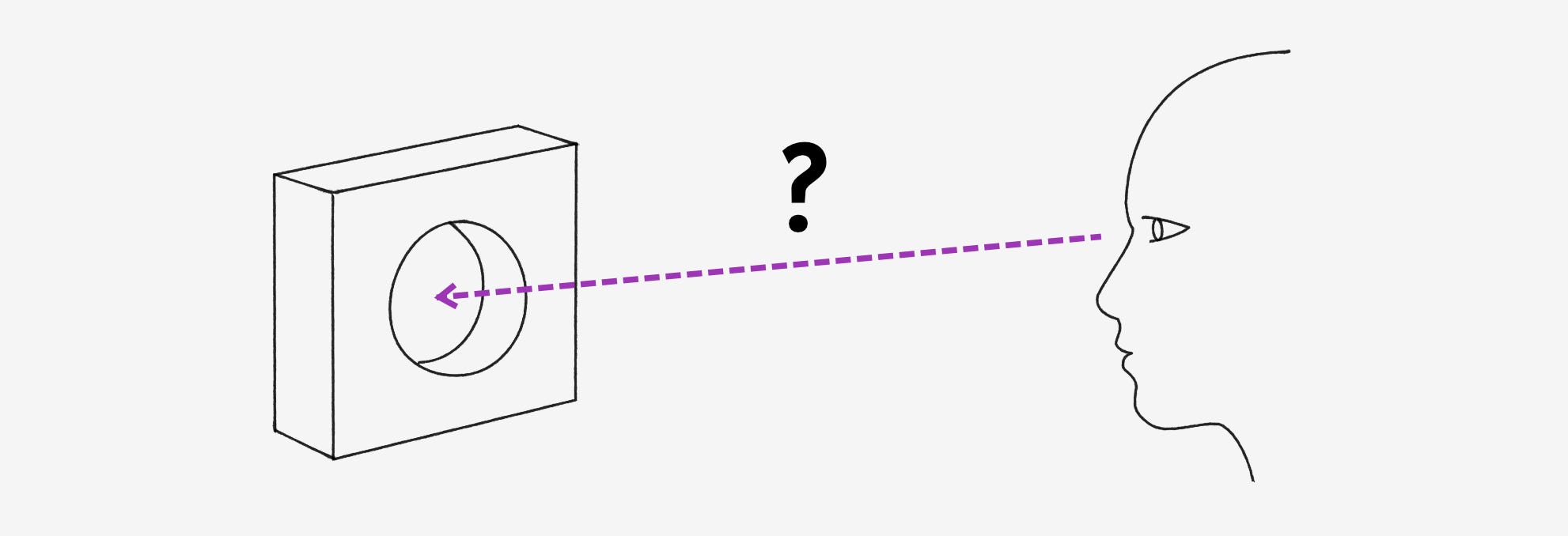
Even if you can resolve the question of free will to your satisfaction, we can still ponder if our perception of the world necessarily matches the “true” fabric of reality. On the extreme end, we have solipsism: a fairly ancient belief that the world we see may not exist at all, and that we might be just dreaming a dream. Solipsism is philosophically unproductive, but also difficult to excise.
In the past couple of decades, the advances in science and medicine have led to the revival of solipsism-adjacent thought experiments. In particular, we came up with the idea of a brain in a vat (BIV): a disembodied organ kept alive and hooked up to a machine producing electrical impulses that replicate the entire sensory experience of life. A more recent but functionally similar notion is the simulation hypothesis: the belief that one might not “really” exist at all — not even as a pickled brain — and that the entire universe may be just a physics simulation ran on a sufficiently capable computer.
And that’s not all! An even wackier variant of this concept is known as the Boltzmann brain (BB). The idea is that if stochastic processes could lead to the spontaneous eruption of life on Earth, it stands to reason that a disembodied brain could one day randomly materialize in the void of space, in a dream-like state, complete with memories of living on Earth. And aren’t the odds of a single brain much better than the odds of a planet with eight billion of them? If so, wouldn’t it be rational to assume that you’re in all likelihood just a doomed Boltzmann brain hurtling through nothingness?
At first blush, the BB argument involves a sleight-of-hand. Just because the ecosystem of Earth is more complex, it doesn’t mean it’s less likely to develop; perhaps life requires just a couple of small coincidences, while the formation of a Boltzmann brain from quantum fluctuations is exceedingly improbable. But then, for some possible fates of the cosmos, the period favorable to planetary life may be short, while the window of opportunity for Boltzmann brains may stretch to all eternity.
A meta-linguistic cure
If all this did not sour you on materialism, you can try to excise the BIV / BB issue by engaging in a bit of meta-linguistic trickery. We start by asserting that concepts have meaning only as they relate to a specific, semantically closed reality. For example, it’s meaningless to ponder if bunnies can exist outside the fabric of space and time. The concept of a bunny — or indeed, the concept of existence — is inseparably tied to the substrate of the universe. From this, we can argue that if you are a brain in a vat, your BIV-English can only describe concepts pertaining to the simulation. A BIV-English statement “I’m a brain in a vat” is demonstrably false within the simulation and it has nothing to semantically attach to on the outside. In other words, the question makes no sense.

The wrench in the works is that we could imagine a mad scientist who kidnaps a victim, harvest their brain, and lets the brain live in a computer simulation substantially identical to the parent reality. Here, the meta-language cop-out seems unsatisfactory: the semantic reach-around is technically invalid, but there’s a 1:1 correspondence between the in-simulation semantics and the real world. In other words, it feels like there’s a certain truth that the captive mind is entitled to — and that at least in some hand-wavy sense, that truth ought to be semantically addressable.
But then, perhaps we ought to reflect on what we’re asking: a materialist universe is a computer too. It seems that we want to know if we’re living in the base computation or in a procedure that’s nested within. Is this a meaningful distinction? Any calculation can be split into sequential steps or merged back into a single expression. Mathematically, the two scenarios are equivalent.
In the end, what the proponents of these experiments really want to know is whether there’s someone up there in the Great Unknowable — if there’s an entity watching the world they’ve created and perhaps intervening from time to time. But if so, the simulation hypothesis is just nerds reinventing theology.

You might also enjoy the following articles:
I write original, in-depth articles about electronics, geek culture, mathematics, algorithms, history, and more. If you like what you see, please subscribe.